
Product Description
Polish Surface Treatment Compression Fittings Male Threaded Coupling for the Conveyance of Fluids at High Pressures
Product Description
IRRIPLAST PP compression fittings line has been designed for the conveyance of fluids at high pressures, for water conveyance, for potable water distribution and applications in the thermo-hydraulic sector. This product line is accordance with the most severe international standards in terms of mechanical properties and alimentary compatibilities.
|
Part |
Material |
|
Body(A) |
Heterophasic block polypropylene co-polymer(PP-B) of exceptional mechanical properties even at high temperature. |
|
Blocking bush(D) |
Polypropylene |
|
Nut(B) |
Polypropylene with dye master of high stability to UV rays andsolidity to heat( S grade according to standard DIN54004) |
|
Clinching ring(C) |
Polyacetal resin(POM)with high mechanical resistance And hardness |
|
O Ring gasket(E) |
Special elastomeric acrylonitrile rubber(EPDM) for alimentary use |
| Description | Code | SIZE | Weight (g/pc) | pcs/ carton |
| Female thread coupling | A1003 | 20*1/2 | 31 | 600 |
| 20*3/4 | 32 | 560 | ||
| 20*1 | 37 | 460 | ||
| 25*1/2 | 47 | 375 | ||
| 25*3/4 | 49 | 360 | ||
| 25*1 | 53 | 330 | ||
| 32*1/2 | 76 | 240 | ||
| 32*3/4 | 77 | 220 | ||
| 32*1 | 79 | 210 | ||
| 32*11/4″ | 86 | 192 | ||
| 40*1 | 109 | 192 | ||
| 40*11/4 | 112 | 130 | ||
| 40*11/2″ | 125 | 120 | ||
| 50*1″ | 185 | 80 | ||
| 50*11/4 | 193 | 80 | ||
| 50*11/2″ | 200 | 80 | ||
| 50*2″ | 206 | 80 | ||
| 63*11/4 | 294 | 48 | ||
| 63*11/2 | 304 | 48 | ||
| 63*2 | 305 | 42 | ||
| 75*2″ | 481 | 27 | ||
| 75*21/2″ | 496 | 24 | ||
| 75*3″ | 560 | 24 | ||
| 90*21/2″ | 720 | 14 | ||
| 90*3″ | 775 | 14 | ||
| 90*4″ | 848 | 14 | ||
| 110*3″ | 1254 | 8 | ||
| 110*4″ | 1264 | 8 |
FEATURES
1. Light weight, easy to load and unload
2. Good chemicals and drugs resistance
3. Small resistance to fluidity
4. Strong mechanical strength
5. Good electrical insulation
6. Water quality unaffected
7. Simple installation
APPLICATION
1. Structure Engineering
2. Water supply system
3. for Agriculture Irrigation
Main Products
View more products,you can click products keywords…
| PPR Pipe | PPR Fitting |
| PP Union Ball Valve | PP Compression Fitting |
| Clamp Saddle | Solenoid Valve |
Sprinkler |
PVC Ball Valves |
Company Profile
OTHER DETAIL SERVICES FOR YOU
1.Any inquiries will be replied within 24 hours.
2.Professional manufacturer.
3.OEM is available.
4.High quality, standard designs,reasonable&competitive price,fast lead time.
5.Faster delivery: Sample will be prepared in 2-3 days.
6.Shipping: We have strong cooperation with DHL,TNT,UPS,MSK,China Shipping,etc.
FAQ
1.What is your MOQ?
Our MOQ is usually 5 CTNS for size from 20-50mm.
2.What is your delievery time?
The time of delievery is around 30-45days.
3.What is your payment terms?
We accept 30% T/T in advance,70% before shipment .or 100% L/C.
4.What is the shipping port?
We ship the goods to HangZhou or ZheJiang port.
5.What is the address of your company?
Our company is located in the HangZhou, HangZhou ZHangZhoug Province,China.You are welcomed to visit our factory.
6.How about the samples?
we could send you the samples for free, and you need to pay the courier fee.
If there are too much samples, then you also need to undertake the sample fee.
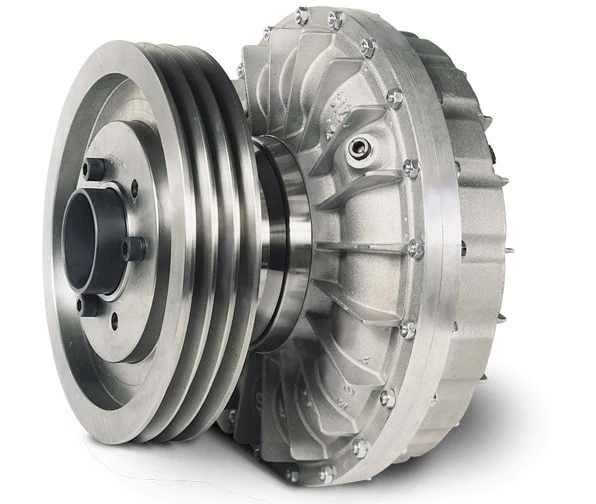
What are the Differences between Fluid Couplings and Mechanical Clutches?
Fluid couplings and mechanical clutches are both components used in power transmission systems, but they operate on different principles and have distinct characteristics:
- Operating Principle:
- Fluid Coupling: A fluid coupling uses hydraulic fluid to transmit torque. It consists of an impeller and a runner immersed in a fluid-filled chamber. When the input shaft (driving member) rotates, it imparts motion to the fluid, which in turn drives the output shaft (driven member).
- Mechanical Clutch: A mechanical clutch relies on physical contact between friction surfaces to transmit torque. When engaged, the clutch plates or discs press against each other, creating a mechanical link between the input and output shafts.
- Slippage:
- Fluid Coupling: Fluid couplings allow a certain degree of slippage between the input and output shafts. This slippage provides a smooth start and helps protect the machinery from shock loads.
- Mechanical Clutch: Mechanical clutches have minimal slippage when engaged, providing a direct and rigid connection between the input and output shafts.
- Control:
- Fluid Coupling: Fluid couplings provide automatic torque transmission without the need for manual engagement or disengagement.
- Mechanical Clutch: Mechanical clutches require manual actuation to engage or disengage, allowing for precise control over power transmission.
- Heat Dissipation:
- Fluid Coupling: Fluid couplings dissipate heat generated during operation, which helps prevent overheating of the system.
- Mechanical Clutch: Mechanical clutches may generate more heat due to friction, requiring additional cooling mechanisms in high-power applications.
- Applications:
- Fluid Coupling: Fluid couplings are commonly used in heavy machinery, such as mining equipment, crushers, and conveyors, where shock absorption and smooth starts are crucial.
- Mechanical Clutch: Mechanical clutches are prevalent in applications where precise engagement and disengagement are required, such as automotive transmissions and manual industrial machinery.
While both fluid couplings and mechanical clutches serve the purpose of transmitting torque, their different operating principles and features make them suitable for specific applications and operating conditions.
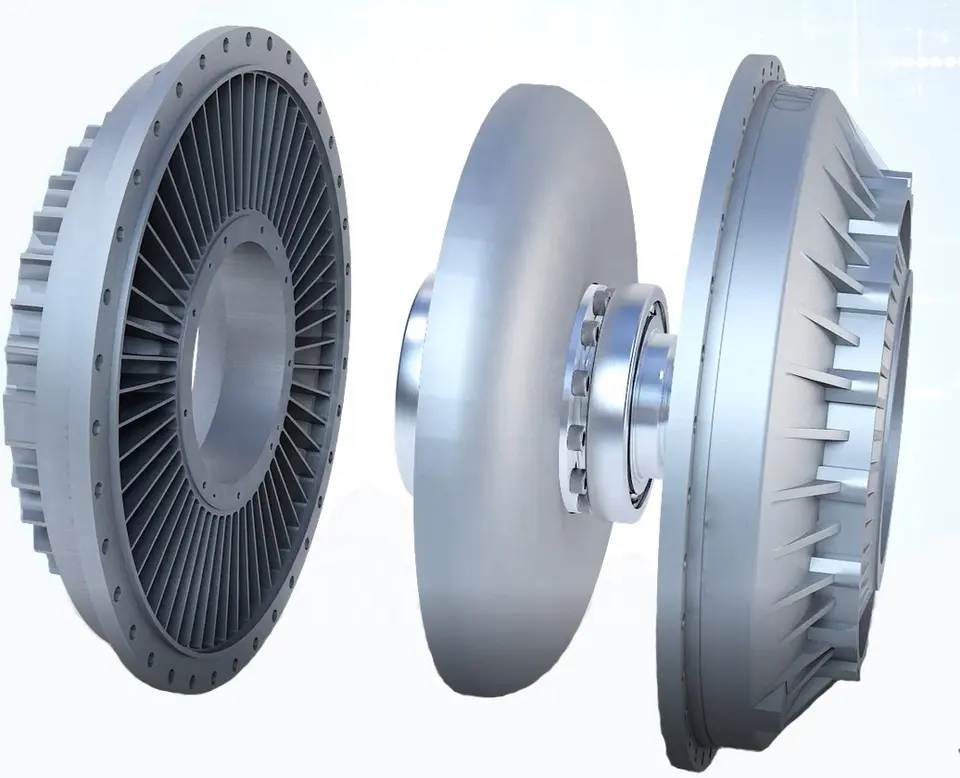
Fluid Couplings for Soft-Start Applications in Conveyor Systems
Yes, fluid couplings are well-suited for soft-start applications in conveyor systems. Soft-starting is the gradual acceleration of the conveyor belt to reduce sudden mechanical stress and current spikes during startup. Fluid couplings provide a smooth and controlled method of power transmission, making them ideal for achieving soft-start capabilities in conveyor systems.
When a conveyor system equipped with a fluid coupling starts, the fluid inside the coupling initially acts as a viscous medium, allowing the input and output shafts to rotate at different speeds. As the fluid coupling fills with fluid, it gradually transmits torque and smoothly accelerates the conveyor belt.
One of the significant advantages of using fluid couplings for soft-start applications is that they provide adjustable startup times. By controlling the amount of fluid inside the coupling, the startup acceleration rate can be precisely tuned to match the specific requirements of the conveyor system.
The soft-start feature offered by fluid couplings helps in several ways:
- Mechanical Stress Reduction: The gradual acceleration minimizes mechanical stress on the conveyor belt, pulleys, and other components, leading to extended equipment life and reduced maintenance costs.
- Energy Savings: Soft-starting prevents sudden current spikes and reduces the power demand during startup, resulting in energy savings and improved efficiency.
- Improved Conveyor Belt Life: By avoiding abrupt starts, the wear and tear on the conveyor belt are reduced, leading to longer belt life and decreased downtime.
- Enhanced Conveyor Control: Soft-start capabilities enable better control over the conveyor system, allowing operators to optimize the material flow and prevent product spillage or jamming.
Fluid couplings offer reliable and cost-effective soft-start solutions for conveyor systems across various industries, including mining, manufacturing, and material handling. They are particularly beneficial when dealing with heavy loads or long conveyor belts, where the avoidance of sudden shock loads is critical.
In summary, fluid couplings are a popular choice for soft-start applications in conveyor systems due to their smooth and controlled power transmission, adjustable startup times, and the ability to reduce mechanical stress and energy consumption during startup.
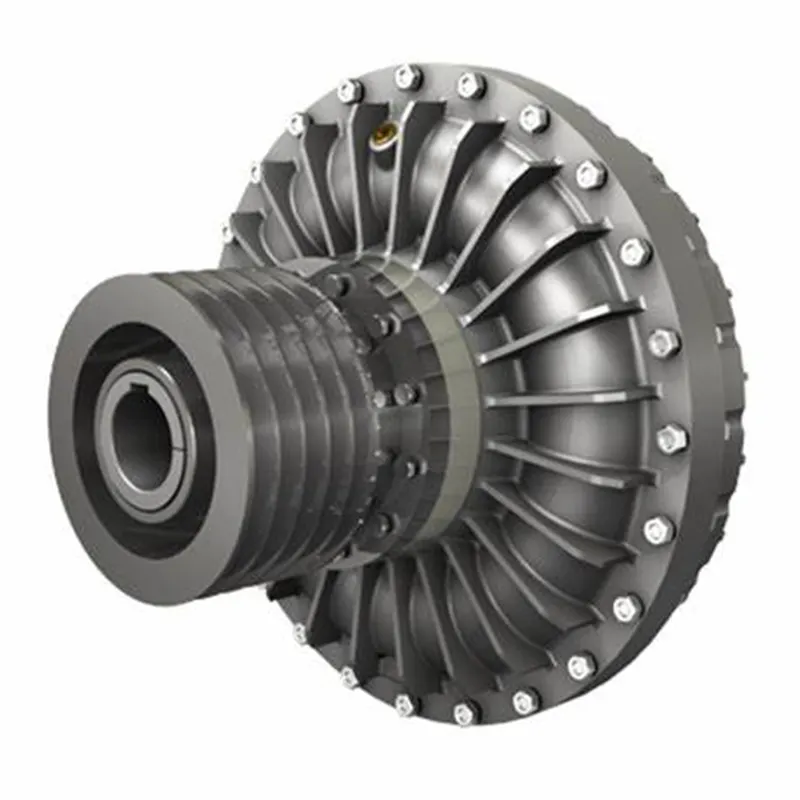
Safety Considerations when Working with Fluid Couplings
Fluid couplings are essential components in various industrial applications, and it’s essential to follow safety guidelines when working with them. Here are some safety considerations:
- Lockout-Tagout (LOTO): Before performing any maintenance or repair work on a fluid coupling, ensure that the equipment is properly shut down and that the energy sources are locked out and tagged out. This prevents accidental startup and protects personnel from potential hazards.
- Fluid Containment: When draining or replacing the fluid in a fluid coupling, use appropriate containers to collect and contain the fluid. Avoid spills, as some coupling fluids may be hazardous.
- High Temperatures: Fluid couplings can reach high temperatures during operation. Allow sufficient cooling time before handling or inspecting the coupling to avoid burns or injuries.
- Personal Protective Equipment (PPE): Wear appropriate PPE, such as gloves and eye protection, when working with fluid couplings to protect against potential splashes or contact with hot surfaces.
- Manufacturer Recommendations: Follow the safety guidelines and instructions provided by the fluid coupling manufacturer for installation, maintenance, and troubleshooting.
- Proper Tools: Use the correct tools and equipment for maintenance and assembly tasks to prevent damage to the fluid coupling and ensure safe working conditions.
- Training: Ensure that personnel working with fluid couplings are adequately trained in their proper use, maintenance, and safety procedures.
- Inspections: Regularly inspect the fluid coupling for any signs of wear, leaks, or abnormalities that could pose safety risks. Address any issues promptly.
- Hot Work: Avoid performing hot work (e.g., welding, cutting) in the vicinity of fluid couplings, as the high-temperature fluids and components may present a fire hazard.
- Consult Experts: If in doubt or facing complex issues with fluid couplings, consult qualified experts or the manufacturer for guidance.
Adhering to these safety considerations will help minimize risks and ensure a safe working environment when dealing with fluid couplings.


editor by CX 2023-11-16