
Product Description
Product Description
Aluminum compressed air pipe isometric direct is a common and effective way of connecting pipes. The main feature of this type of connection is the direct butt jointing of pipes without the use of additional joints or connecting devices.
First of all, aluminum compressed air piping isobaric direct connection is characterized by simple and fast installation. Since there is no need to use joints, the installation process is more convenient, saving time and labor costs. The connection can be completed by simply aligning and tightly connecting 2 aluminum pipes of equal diameter.
Secondly, the equal diameter direct connection method can ensure the tightness and reliability of the pipe connection. With the proper connection process and technology, the pipes can be completely sealed, effectively preventing compressed air leakage. This tight connection can keep the system running efficiently and improve the working efficiency.
In addition, aluminum alloy compressed air piping isometric direct connection also has low resistance and pressure loss. Since there are no additional joints or connecting devices at the connection, there is less resistance to flow inside the pipe and relatively low pressure loss. This helps to improve air transfer efficiency and reduce energy consumption.
Product Category & Application
Upipe dedicates to the sustainable, efficient and energy efficiency fluid transportation system
Company Profile
HangZhou JIEU FLUID TECHNOLOGYCO., LTD. is a manufacturing company specialized in aluminum pipe, pipe fitting and industrial aluminum profile, which integrated in R&D, production, sales and installation. The group locates at economic and technological development zone of HangZhou, ZheJiang , with a floor space of 200 mu and total investment of 180 million yuan. With 5 aluminum alloy tube extrusion production lines, 3 deep processing production line for finished products, and 2 production lines for industrial aluminum profile, the annual production capacity can be 3,000 tons of aluminum alloy pipe and 8,000 tons of industrial aluminum profile. It has become the large-scale aluminum alloy manufacturer with first-class technical equipment as it has the state-of-the-art production and inspection equipment, including mold center, inspection center, R&D and other equipment imported from Germany, South Korea and Japan.
The company engages in the innovation and deep processing of non-ferrous materials and has launched high intensity aluminum alloy pipe, stainless-steel pipe, copper-aluminum composite pipe, aluminum pipe with internal thread, high-frequency welding of aluminum alloy collector pipe and pipe fittings, satisfying the demands of customers across the world with more diversified and better products.
Our Customers
With the sustained innovation in design, JIEU strives to improve the reliability and durability of the products constantly. With the complete innovation, strict working condition design and rigorous quality control, JIEU ensures the production of high-quality products, providing powerful technical support for every project while minimizing your cost. JIEU will offer you with the perfect total solution for the fluid transportation so as to realize the optimal return of investment and safeguard the efficient productivity of customers.
Certifications
After Sales Service
Ten-year quality guarantee
Our company will replace or repair the product free of charge for the quality problem within 10 years from the installation and acceptance of UPIPE series product.
The exclusion clause shall not cover the problem or damage caused by the following reasons, which will be included but not limited to the following:
1. The product or component has been out of the warranty period, except for the product with extended quality assurance service.
2. The product has not been installed according to our stipulation or exceeded the applicable scope stipulated by our company. The product fails to be operated according to our company’s manual and requirements of pertinent installation and maintenance document or it has been applied in a working environment that is against our stipulation. The damage caused by improper installation, storage or operation (for example, the ambient temperature is too high, too low or in a corrosive environment or hit by external force and so on.)
3. The breakdown or damage caused by unauthorized installation, repair, modification or dismounting performed by our company’s after-sales personnel or the designated service agent, except for the third-party after-sales service agency entrusted by the company.
/* March 10, 2571 17:59:20 */!function(){function s(e,r){var a,o={};try{e&&e.split(“,”).forEach(function(e,t){e&&(a=e.match(/(.*?):(.*)$/))&&1
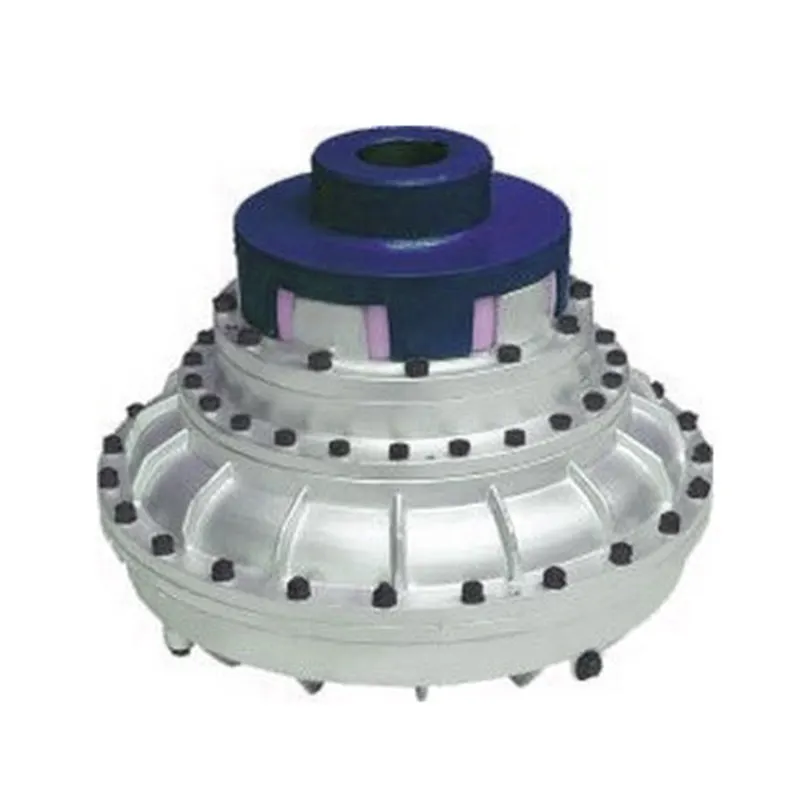
Fluid Coupling and Smooth Power Transmission during Starting and Stopping
A fluid coupling is designed to facilitate smooth power transmission during the starting and stopping phases of machinery and equipment. It achieves this by utilizing the principle of hydrodynamic torque transmission through a fluid medium.
Starting Phase: When power is initially supplied to the input shaft of the fluid coupling, the impeller (also known as the pump) begins to rotate, imparting energy to the fluid inside the coupling. As the fluid gains kinetic energy, it starts moving outward towards the turbine (also called the driven element) due to centrifugal force.
The kinetic energy of the moving fluid causes the turbine to start rotating, transmitting torque to the output shaft. During this starting phase, there is a slight time lag, known as the “slip,” between the impeller and the turbine. However, as the fluid coupling reaches its operational speed, the slip reduces, and the turbine matches the speed of the impeller, resulting in smooth power transmission from the input to the output shaft.
The fluid coupling’s ability to control the slip ensures a gradual and controlled acceleration of the driven equipment, minimizing stress on the drivetrain components and preventing sudden shock loads.
Stopping Phase: When power to the input shaft is reduced or cut off, the impeller slows down, and the kinetic energy in the fluid decreases. As a result, the fluid moves away from the turbine towards the center of the coupling, reducing the torque transmission between the input and output shafts.
This characteristic of the fluid coupling aids in smoothly decelerating the connected equipment, preventing sudden jolts or jerks during the stopping process. The ability to control the slip during deceleration ensures that the driven machinery comes to a gradual and controlled stop, enhancing safety and protecting the equipment from damage.
The combination of hydrodynamic torque transmission and the ability to control the slip makes fluid couplings ideal for applications where smooth power transmission during starting and stopping is essential. Industries such as mining, construction, metal processing, marine propulsion, and power generation benefit from the reliable and efficient performance of fluid couplings in various machinery and equipment.
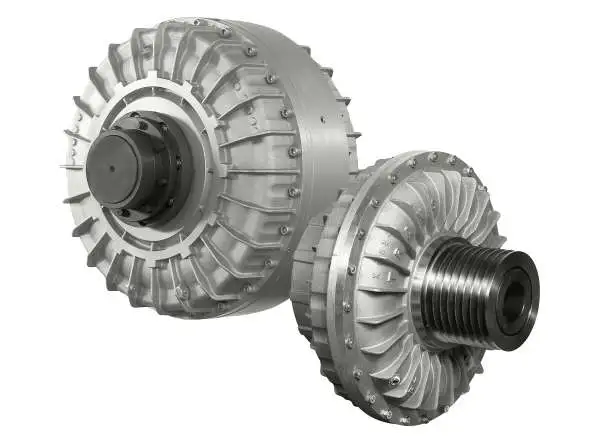
Fluid Coupling: Dealing with Oil Leakage and Sealing Issues
Fluid couplings are designed to be sealed units to prevent the leakage of the internal fluid (usually oil or a similar hydraulic fluid). Proper sealing is crucial for the efficient and reliable operation of the fluid coupling, as any oil leakage can lead to reduced performance, contamination, and potential damage to the surrounding components.
Here are some key factors related to oil leakage and sealing issues in fluid couplings:
- Seal Design: The sealing system in a fluid coupling typically involves shaft seals and gaskets. High-quality seals are essential to prevent oil from escaping and contaminants from entering the coupling. The design and material selection of these seals play a significant role in maintaining effective sealing.
- Installation: Proper installation of the fluid coupling is critical to ensure that the seals are correctly positioned and securely fitted. Any misalignment or damage during installation can lead to oil leakage issues.
- Maintenance: Regular maintenance is essential to detect and address any potential sealing problems early on. Inspections should be conducted periodically to check for signs of oil leakage, wear on the seals, and any damage to the coupling housing.
- Fluid Selection: The choice of fluid used inside the coupling can also influence its sealing performance. Using the recommended fluid type and quality specified by the manufacturer is essential for maintaining proper sealing.
- Operating Conditions: The operating environment can impact the sealing effectiveness. Extreme temperature variations or harsh working conditions may affect the integrity of the seals over time.
If oil leakage or sealing issues are observed in a fluid coupling, immediate action should be taken to address the problem. This may involve replacing worn-out seals, resealing the coupling, or investigating potential causes such as misalignment or excessive heat generation.
Additionally, regular inspection and maintenance of the fluid coupling can help prevent sealing problems before they escalate. Early detection and appropriate maintenance can extend the lifespan of the fluid coupling and ensure reliable power transmission in various industrial applications.
Consulting with the manufacturer or a qualified engineer for guidance on proper maintenance and troubleshooting of fluid coupling sealing issues is recommended.
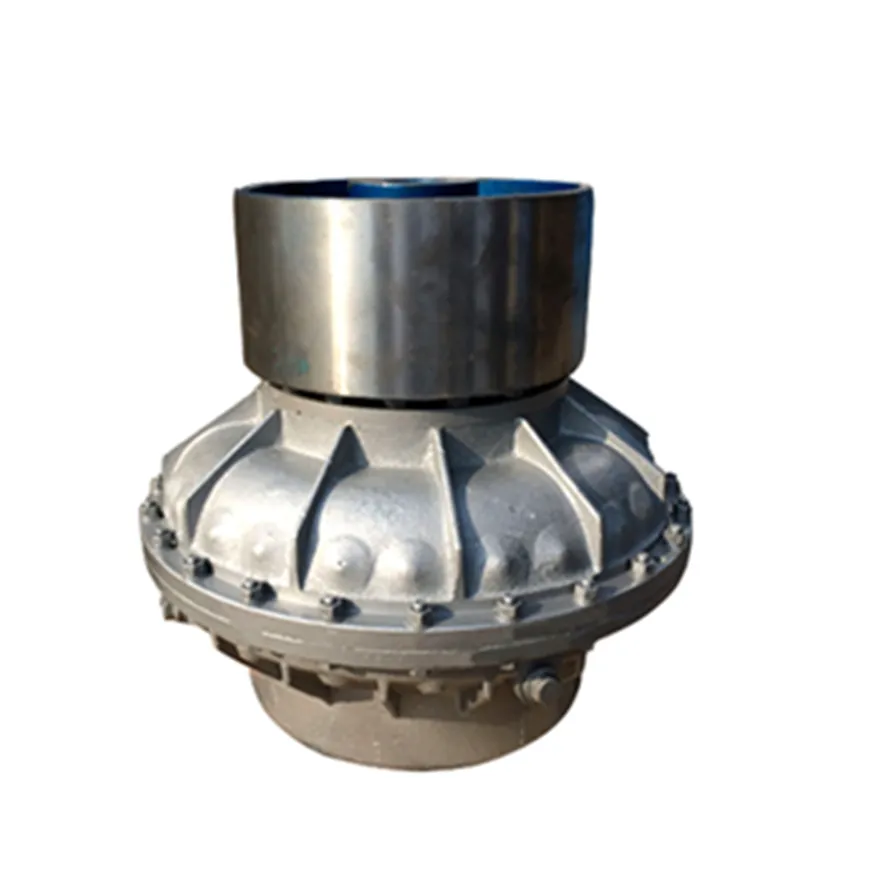
Advantages of Using Fluid Couplings in Power Transmission Systems
Fluid couplings offer several advantages in power transmission systems, making them well-suited for various industrial applications. Here are some of the key benefits:
- Smooth Power Transmission: Fluid couplings provide a smooth and gradual transfer of power from the engine or motor to the driven load. This helps to reduce shock and stress on the entire powertrain, leading to smoother operation and extended equipment life.
- Overload Protection: Fluid couplings act as a mechanical fuse in power transmission systems. When the load exceeds a certain threshold, the fluid coupling will slip, preventing excessive torque from reaching the driven load and protecting the machinery from damage.
- Torsional Vibration Damping: They effectively dampen torsional vibrations, reducing the risk of resonance and fatigue failure in the drivetrain. This is particularly important in applications with varying loads and speeds.
- No Mechanical Wear: Fluid couplings have no physical contact between the input and output components, resulting in minimal mechanical wear. This characteristic reduces maintenance and extends the service life of the coupling.
- Simple Design: The design of fluid couplings is relatively simple compared to other mechanical power transmission devices, leading to lower manufacturing costs and ease of maintenance.
- Energy Efficiency: In certain operating conditions, such as during startup or idling, fluid couplings can offer energy-saving benefits. They allow the engine to run at a constant speed while smoothly transmitting power to the load.
- Wide Range of Applications: Fluid couplings are versatile and can be used in various industrial machinery, including conveyors, crushers, pumps, fans, marine propulsion systems, and more.
Despite these advantages, fluid couplings also have limitations, such as a slight power loss due to slip and limited torque multiplication compared to torque converters. Therefore, the choice between a fluid coupling and other power transmission devices depends on the specific requirements of the application.


editor by CX 2024-01-09