
Product Description
Type F Aluminum Hose Fitting Quick Coupling Quick Release Fluid Safety Camlock Coupling
Aluminum cam and groove adapters are produced according to A-A-59326(replacing original standard Mil-C-27487) or EN14420-7(replacing DIN 2828), size from 1/2″ to 8″. The coupling of cam grooves between manufacturers are interchangeable, but no 1/2″(12.7 mm), 5″(127 mm), and 8″(203.2 mm) interchangeability. EN14420-7(replacing DIN 2828)Camlock coupling can be coupled with A-A-59326, EN14420-7 Camlock coupling hose tail is used in conjunction with EN 14420-3/DIN2817 Clamps.
| Name | Aluminum Coupling Type F |
| Body Material: | Aluminum |
| Size: | From 1/2” to 8” |
| MOQ: | 50 PCS |
| Certificates: | CE, ISO9001:2015 |
| Application: | Water lines and irrigation in industry, construction agriculture, and horticulture. |
| Connection: | Male thread |
| Arm Material: | Stainless steel and brass |
| Working pressure: | 50-250 CHINAMFG (It depends on the size and temperature) |
| Manufacture method: | Gravity casting |
| Operating temperature : | -40 to 145ºC(depending on the rubber ring material) |
| Thread: | BSP, BSPT, NPT, G(ISO228.1), and R(DIN2999). |
Camlock fittings provide a simple and reliable method for connecting and disconnecting hoses, with good wear resistance, chemical resistance and economic cost. These camlock fittings can transport gasoline, hydraulic oil, kerosene, water, mud, saltwater, acid, and alkaline fluid media by connecting PVC pipes, rubber hoses, etc. It has the advantages of quick connection, flexible disassembly and labor-saving.
The use and connection way of the cam and groove couplings:
Type D Camlock can usually be used with E, F, and (Dust Plug) types.
To make a connection, simply slide the Camlock adapter into the Camlock coupling, and with normal hand pressure, press the cam levers down.
Camlock fittings Feature:
Economy, lightweight, convenience, interchangeability
Connect without tools
Good corrosion and chemical resistance
Camlock fittings industry applications:
Industry: Petroleum, mining, municipal, construction, chemicals, agriculture
Applications: Fuel Transport, Hydraulic Oil, Petroleum Products, Irrigation, Water Treatment, Salt Water, Waste Water, Chemical Transport, and Storage
Camlock fittings are not suitable for conveying compressed air and steam.
Our Advantage
We are experienced as we have been in this industry as a manufacturer for more than 10 years. Both quality and service are highly guaranteed. Absolutely prompt delivery. We can produce according to specific drawings from customers. Welcome OEM/ODM project. Strict control on quality. High efficient and well-trained sales service team. ISO9001, CE, and SGS certified.
FAQ
1. Q: Are you a producer or trading company?
A: We are an experienced manufacturer. We own a production line and kinds of machines.
2. Q: Can you make our specific logo on the part?
A: Yes please provide me your logo and we will make your logo on the part.
3. Q: Can you manufacture products according to my drawings?
A: Yes we can manufacture according to the client’s drawings if drawings or samples are available. We are experienced enough to make new tools.
4. Q: Can I get some samples?
A: We are honored to offer you our samples. Normally it is for free like 3-5 pcs. It is charged if the samples are more than 5 pcs. Clients bear the freight cost.
5. Q: How many days do you need to finish an order?
A: Normally it takes about 30 days to finish the order. It takes more time around CHINAMFG season, or if the order involves many kinds of different products.
6. Q: What kind of rubber washer do you apply to Camlock couplings?
A: Normally we use an NBR gasket.
contact-info.html
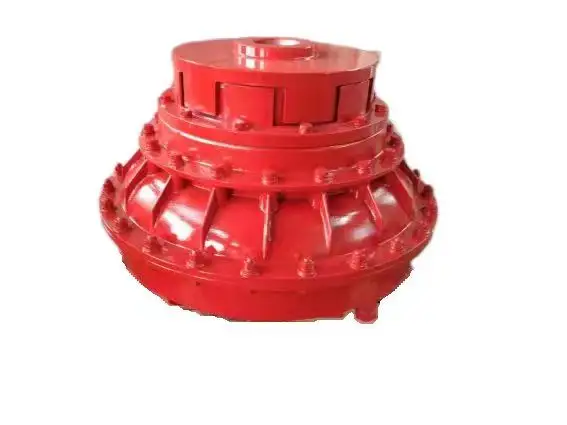
Key Parameters in Designing a Fluid Coupling System
Designing a fluid coupling system requires careful consideration of various parameters to ensure optimal performance and efficiency. Here are the key parameters to take into account:
- Power Rating: Determine the power requirements of the connected equipment to select a fluid coupling with an appropriate power rating. Undersized couplings may lead to overheating and premature wear, while oversized couplings can result in energy losses.
- Input and Output Speeds: Consider the rotational speeds of the input and output shafts to ensure the fluid coupling can accommodate the desired speed range without slipping or exceeding its limitations.
- Torque Capacity: Calculate the maximum torque expected in the system and choose a fluid coupling with a torque capacity that exceeds this value to handle occasional overloads and prevent damage.
- Fluid Viscosity: The viscosity of the fluid inside the coupling affects its torque transmission capabilities. Select a fluid viscosity suitable for the application and operating conditions.
- Start-Up and Load Conditions: Analyze the start-up torque and load variations during operation. The fluid coupling should be capable of handling these conditions without excessive slip or stress on the drivetrain.
- Environmental Factors: Consider the ambient temperature, humidity, and potential exposure to contaminants. Ensure the fluid coupling’s materials and sealing mechanisms can withstand the environmental conditions.
- Size and Weight: Optimize the size and weight of the fluid coupling to minimize space requirements and facilitate installation and maintenance.
- Torsional Resonance: Evaluate torsional resonances in the system and select a fluid coupling with appropriate damping characteristics to mitigate vibrations.
- Overload Protection: Determine if overload protection features, such as slip or torque limiting, are necessary to safeguard the connected equipment from damage.
- Compatibility: Ensure the fluid coupling is compatible with the specific application, including the type of driven equipment, its mechanical characteristics, and any other interrelated components in the drivetrain.
- Operational Costs: Consider the long-term operational costs, maintenance requirements, and efficiency of the fluid coupling to optimize the overall lifecycle cost of the system.
- Safety Standards: Adhere to relevant safety standards and regulations in the design and installation of the fluid coupling system to ensure safe and reliable operation.
By carefully evaluating these parameters and selecting a fluid coupling that aligns with the specific requirements of the application, engineers can design a reliable and efficient fluid coupling system for various industrial and power transmission applications.
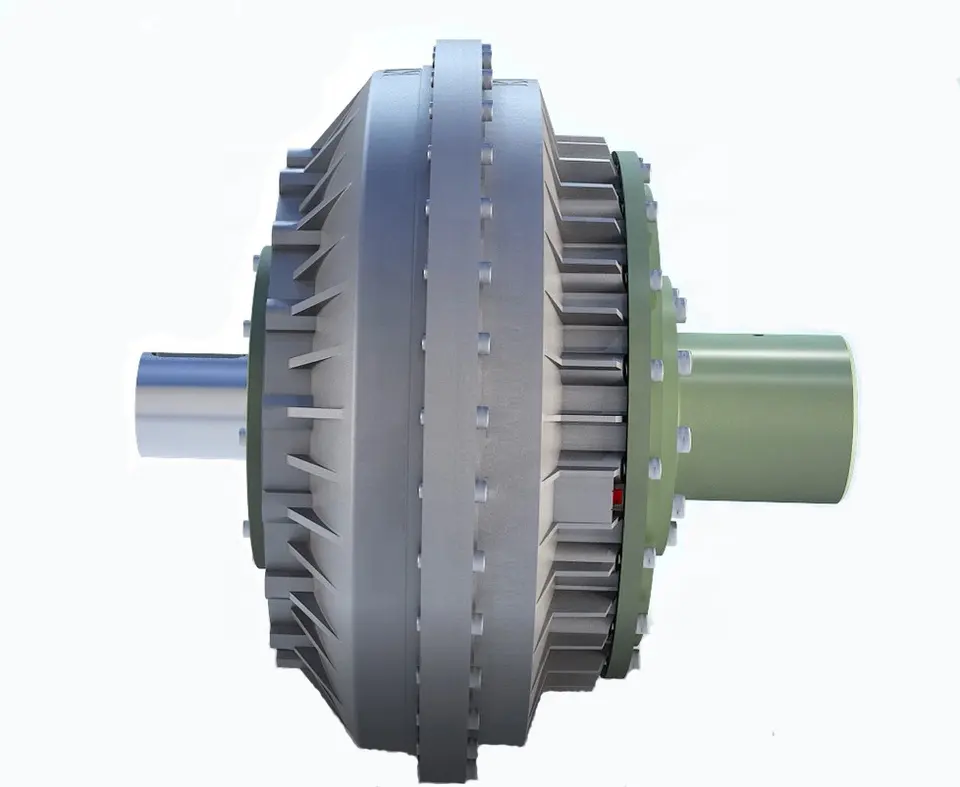
Cost Implications of Using Fluid Couplings in Comparison to Other Power Transmission Methods
The cost implications of using fluid couplings in power transmission depend on various factors, including the application requirements, the size of the system, and the operational conditions. While fluid couplings offer several advantages, they may have different cost considerations compared to other power transmission methods like mechanical clutches, VFDs (Variable Frequency Drives), and direct mechanical drives.
1. Initial Investment:
The initial cost of a fluid coupling can be higher than that of a mechanical clutch or a direct mechanical drive. Fluid couplings contain precision components, including the impeller and turbine, which can impact their initial purchase price.
2. Maintenance Costs:
Fluid couplings are generally considered to have lower maintenance costs compared to mechanical clutches. Mechanical clutches have wear and tear components that may require more frequent replacements, leading to higher maintenance expenses over time.
3. Energy Efficiency:
Fluid couplings are highly efficient in power transmission, especially during soft-start applications. Their ability to reduce shock loads and provide a smooth acceleration can result in energy savings and operational cost reductions.
4. Space and Weight:
Fluid couplings are usually more compact and lighter than some mechanical clutches, which can be advantageous in applications with space constraints or weight limitations.
5. Specific Application Considerations:
The suitability and cost-effectiveness of fluid couplings versus other power transmission methods can vary based on specific application requirements. For example, in soft-start applications, fluid couplings may be the preferred choice due to their ability to reduce mechanical stress and protect connected equipment.
6. Lifespan and Reliability:
While the initial cost of a fluid coupling might be higher, their longevity and reliability can lead to lower overall life cycle costs compared to other power transmission methods.
In conclusion, the cost implications of using fluid couplings in power transmission depend on the particular application and the total cost of ownership over the equipment’s lifespan. Although fluid couplings may have a higher initial investment, their long-term reliability, energy efficiency, and lower maintenance costs can make them a cost-effective choice in many industrial applications.
Fluid Couplings and Variable Speed Control
Fluid couplings are well-suited for certain applications that require variable speed control. While fluid couplings are primarily designed for smooth power transmission and torque multiplication, they can be used in combination with other devices to achieve variable speed control.
The primary method of achieving variable speed control with a fluid coupling is by using a hydraulic coupling or a hydraulic torque converter. A hydraulic coupling is essentially a fluid coupling with an additional chamber that allows for controlled fluid flow. By adjusting the fluid flow rate, the output speed can be varied, thus providing variable speed control.
Hydraulic torque converters are similar to fluid couplings but have an additional component called a stator. The stator redirects the fluid flow in a way that enhances torque multiplication at low speeds and improves efficiency at high speeds. By altering the stator’s position, the output speed can be varied, enabling variable speed control.
Variable speed control with fluid couplings is often used in applications such as industrial machinery, mining equipment, and certain types of vehicles. It allows for smooth and efficient speed adjustments without the need for mechanical gear changes, providing flexibility in various operating conditions.
However, it’s important to note that while fluid couplings can offer some degree of variable speed control, they are not as versatile as other speed control mechanisms like variable frequency drives (VFDs) or electronic controllers. Therefore, the selection of the appropriate speed control method depends on the specific requirements and characteristics of the application.


editor by CX 2023-12-08