
Product Description
Wholesale Factory Price Auto Fluid Coupling 16210-0E571 For Hilux Revo
Product Specification
| OEM | 16210-0E571 |
| Car Maker |
For Toyota |
| Brand | FENGMING |
| Condition | Brand New |
| Stock Availability | Yes |
| Minimum Order QTY | 2PCS |
| OEM Order Acceptability | Yes |
| Small order Lead Time | 3-7 days |
| Large Order Lead Time | 15-30 days |
| Quality Warranty | half year |
| Package | As neutral or as customer’s request, FENG MING PACKING |
| Payment Methods | Paypal, Western Union, Bank T/T, L/C |
| Shipment Methods | DHL, UPS, TNT, FedEx, Aramex, EMS, Air Cargo, Sea Cargo |
Company Introduction
/* March 10, 2571 17:59:20 */!function(){function s(e,r){var a,o={};try{e&&e.split(“,”).forEach(function(e,t){e&&(a=e.match(/(.*?):(.*)$/))&&1
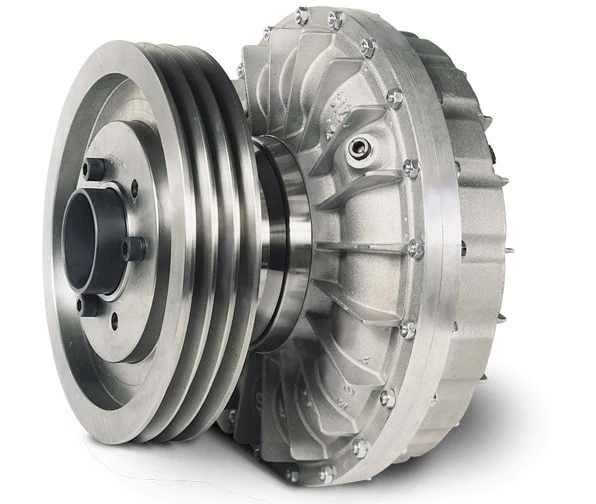
What are the Differences between Fluid Couplings and Mechanical Clutches?
Fluid couplings and mechanical clutches are both components used in power transmission systems, but they operate on different principles and have distinct characteristics:
- Operating Principle:
- Fluid Coupling: A fluid coupling uses hydraulic fluid to transmit torque. It consists of an impeller and a runner immersed in a fluid-filled chamber. When the input shaft (driving member) rotates, it imparts motion to the fluid, which in turn drives the output shaft (driven member).
- Mechanical Clutch: A mechanical clutch relies on physical contact between friction surfaces to transmit torque. When engaged, the clutch plates or discs press against each other, creating a mechanical link between the input and output shafts.
- Slippage:
- Fluid Coupling: Fluid couplings allow a certain degree of slippage between the input and output shafts. This slippage provides a smooth start and helps protect the machinery from shock loads.
- Mechanical Clutch: Mechanical clutches have minimal slippage when engaged, providing a direct and rigid connection between the input and output shafts.
- Control:
- Fluid Coupling: Fluid couplings provide automatic torque transmission without the need for manual engagement or disengagement.
- Mechanical Clutch: Mechanical clutches require manual actuation to engage or disengage, allowing for precise control over power transmission.
- Heat Dissipation:
- Fluid Coupling: Fluid couplings dissipate heat generated during operation, which helps prevent overheating of the system.
- Mechanical Clutch: Mechanical clutches may generate more heat due to friction, requiring additional cooling mechanisms in high-power applications.
- Applications:
- Fluid Coupling: Fluid couplings are commonly used in heavy machinery, such as mining equipment, crushers, and conveyors, where shock absorption and smooth starts are crucial.
- Mechanical Clutch: Mechanical clutches are prevalent in applications where precise engagement and disengagement are required, such as automotive transmissions and manual industrial machinery.
While both fluid couplings and mechanical clutches serve the purpose of transmitting torque, their different operating principles and features make them suitable for specific applications and operating conditions.
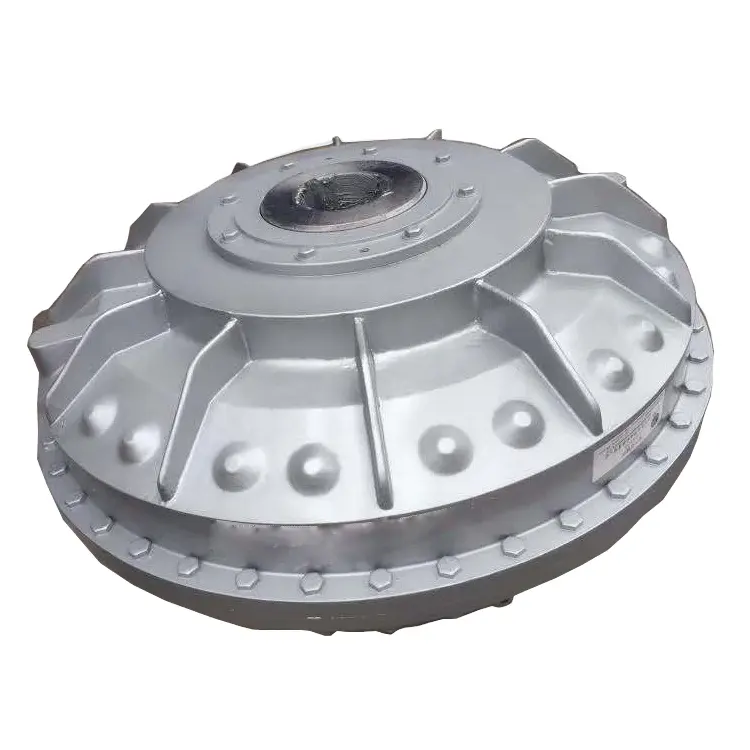
Contribution of Fluid Coupling to the Overall Efficiency of a Mechanical System
A fluid coupling plays a crucial role in improving the overall efficiency of a mechanical system, especially in applications where smooth power transmission, soft-starting, and torque control are essential. Here’s how a fluid coupling contributes to system efficiency:
1. Smooth Power Transmission:
Fluid couplings provide a smooth and gradual transfer of power from the driving to the driven machinery. The absence of direct mechanical contact between the input and output shafts reduces shock loads and vibrations, leading to less wear and tear on the connected equipment. This smooth power transmission results in increased system efficiency and reduced downtime.
2. Soft-Start Capability:
Fluid couplings offer soft-starting functionality, which is particularly beneficial for high-inertia or heavy-load applications. During startup, the fluid coupling allows the input shaft to gradually accelerate the output shaft, preventing sudden jerks or torque spikes. Soft-starting not only protects the mechanical components but also reduces energy consumption during the starting phase, contributing to overall efficiency.
3. Torque Control:
Fluid couplings enable precise control over the torque transmitted between the driving and driven machinery. By adjusting the fill level or using variable speed couplings, the torque output can be fine-tuned to match the requirements of the application. This feature ensures optimal performance and energy efficiency, especially in systems where torque demand varies during operation.
4. Overload Protection:
In case of sudden overloads or jamming of the driven machinery, the fluid coupling acts as a torque limiter. It will slip and absorb excess torque, protecting the mechanical system from damage. This overload protection not only safeguards the equipment but also contributes to the longevity and efficiency of the entire system.
5. Heat Dissipation:
Fluid couplings can absorb and dissipate heat generated during continuous operations. This heat dissipation capability prevents the system from overheating, ensuring consistent performance and avoiding thermal damage to the machinery. By maintaining proper operating temperatures, the fluid coupling aids in improving overall efficiency.
6. Energy Savings:
With its ability to reduce shock loads and provide smooth acceleration, a fluid coupling can help save energy during starting and stopping cycles. The elimination of mechanical shocks and vibrations reduces energy losses, resulting in higher overall energy efficiency.
In summary, a fluid coupling enhances the overall efficiency of a mechanical system by providing smooth power transmission, soft-start capability, precise torque control, overload protection, heat dissipation, and energy savings. Its contributions to reduced wear and tear, energy-efficient operations, and enhanced equipment lifespan make it a valuable component in various industrial applications.
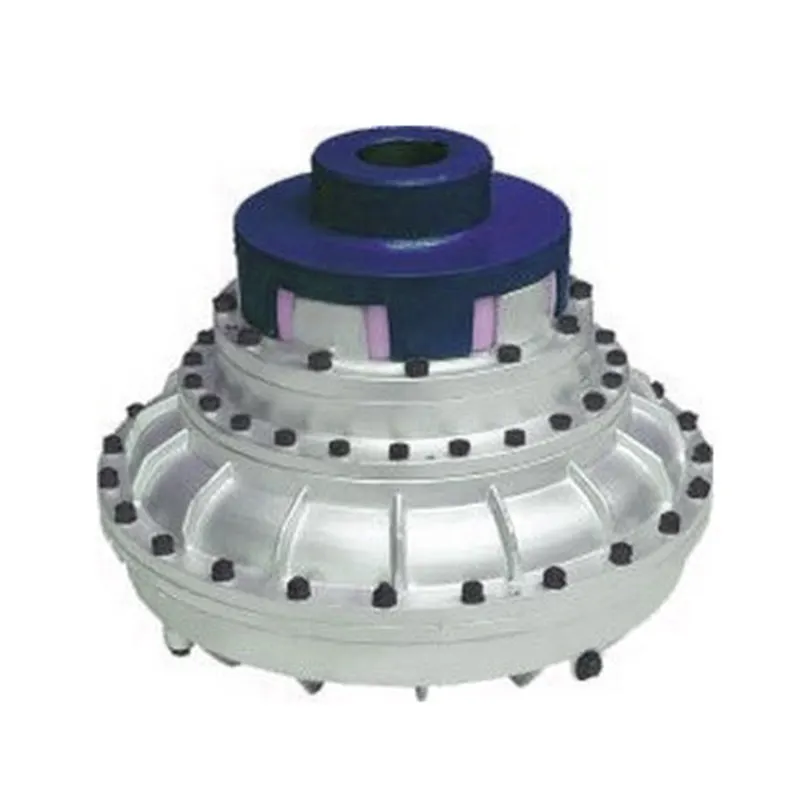
Fluid Couplings and Energy Efficiency in Power Transmission
Fluid couplings play a significant role in improving energy efficiency in power transmission systems. They achieve this by enabling smooth and efficient torque transmission while reducing energy losses during various operating conditions.
One of the key factors contributing to the energy efficiency of fluid couplings is their hydrodynamic principle of operation. When power is transmitted through a fluid coupling, it operates on the principle of hydrodynamic power transmission. The primary component, known as the impeller, rotates and imparts motion to the fluid inside the coupling. This motion creates a hydrodynamic force that transmits the torque to the output side.
During the initial startup or when there is a significant speed difference between the input and output shafts, the fluid coupling allows the input shaft to accelerate gradually. This feature, known as the soft start, reduces the mechanical stress on the connected components and the power source. By avoiding sudden acceleration, fluid couplings minimize the energy spikes that occur during direct starts in systems without couplings.
Moreover, fluid couplings act as a torque limiter when the load exceeds a certain threshold. This characteristic, known as the slip, allows the fluid coupling to disengage slightly when the torque reaches a predetermined level. As a result, it protects the system from overloads and reduces energy wastage during high-stress conditions.
Additionally, fluid couplings help mitigate the impact of shock loads and torsional vibrations, which can reduce wear and tear on mechanical components. By minimizing vibrations and shock loads, fluid couplings contribute to longer equipment life and, consequently, lower maintenance and replacement costs.
However, it’s important to note that like any mechanical component, fluid couplings have some energy losses due to viscous drag and heat dissipation. While modern fluid couplings are designed with improved efficiency, these losses need to be considered when assessing the overall energy efficiency of a power transmission system.
In summary, fluid couplings enhance energy efficiency in power transmission by providing soft starts, torque limiting, and damping of vibrations, thus reducing energy wastage and extending the life of the connected equipment.


editor by CX 2024-02-17