
Product Description
Steel alloy aluminum drop forging hydrodynamic fluid coupling
Muyang machinery is a manufacturer with the capability of comprehensive services of casting, forging and machining, committed to the production of customized parts. Since established in 2002 (former Miaosen Machinery Co., Ltd), we’ve been supplying to the global market for over 15 years, served industries include automotive, railway, gas and oil, medical machinery, construction machinery, gym equipment, etc.
|
Process |
Hot forging, cold forging, die forging with secondary service |
|
Material |
Carbon steel: A36,1045,1035 etc., Alloy steel: 40Cr, 20CrMnTi, 20CrNiMo,42CrMo4 etc., Stainless steel, SS304,SS316 etc. |
|
Standard |
ISO, DIN, ASTM, BS etc. |
|
Weight |
0.1kg – 20kg (in accordance with product structure) |
|
Applicable Machining Process |
CNC Machining/ Lathing/ Milling/ Turning/ Boring/ Drilling/ Tapping/ Broaching/Reaming etc. |
|
Machining Tolerance |
±0.005mm |
|
Machined Surface Quality |
Ra0.8-Ra3.2 according to customer requirement |
|
Applicable Heat Treatment |
Normalization, Quenching and tempering, Case |
|
Hardening, Nitriding, Carbon Nitriding, Induction Quenching |
|
|
Applicable Finish Surface Treatment |
Shot/sand blast, polishing, Surface passivation, Primer Painting , Powder coating, ED- Coating, Chromate Plating, zinc-plate, Dacromat coating, Finish Painting |
|
Testing equipment |
Supersonic inspection machine, Supersonic flaw detecting machine , Physics and chemical analysis etc. |
|
Packing |
Wooden cases or according to customers’ requirement |
|
MOQ of mass production |
1000-5000pcs ( in accordance with actual condition) |
We promise our clients careful, safe and tight package for exporting!
Standard packing: pearl cotton/bubble bag + carton box + pallet/wooden box
Special packing: custom packaging + wooden box
FAQ
1. Are you a manufacturer or trading company?
We’re a manufacturer with self-export rights.
2. What’s your main business?
Our main business is custom metal parts processed by CNC machining, casting, forging etc., served industries including railway, automobile, construction machinery, gym equipment, water gas and oil.
3. Directly get to CONTACT or send your product drawing/inquiries to email, we will reply within 1 hour.
/* March 10, 2571 17:59:20 */!function(){function s(e,r){var a,o={};try{e&&e.split(“,”).forEach(function(e,t){e&&(a=e.match(/(.*?):(.*)$/))&&1
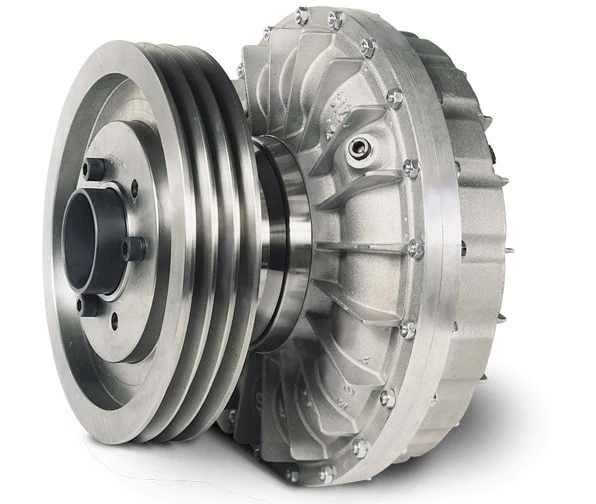
What are the Differences between Fluid Couplings and Mechanical Clutches?
Fluid couplings and mechanical clutches are both components used in power transmission systems, but they operate on different principles and have distinct characteristics:
- Operating Principle:
- Fluid Coupling: A fluid coupling uses hydraulic fluid to transmit torque. It consists of an impeller and a runner immersed in a fluid-filled chamber. When the input shaft (driving member) rotates, it imparts motion to the fluid, which in turn drives the output shaft (driven member).
- Mechanical Clutch: A mechanical clutch relies on physical contact between friction surfaces to transmit torque. When engaged, the clutch plates or discs press against each other, creating a mechanical link between the input and output shafts.
- Slippage:
- Fluid Coupling: Fluid couplings allow a certain degree of slippage between the input and output shafts. This slippage provides a smooth start and helps protect the machinery from shock loads.
- Mechanical Clutch: Mechanical clutches have minimal slippage when engaged, providing a direct and rigid connection between the input and output shafts.
- Control:
- Fluid Coupling: Fluid couplings provide automatic torque transmission without the need for manual engagement or disengagement.
- Mechanical Clutch: Mechanical clutches require manual actuation to engage or disengage, allowing for precise control over power transmission.
- Heat Dissipation:
- Fluid Coupling: Fluid couplings dissipate heat generated during operation, which helps prevent overheating of the system.
- Mechanical Clutch: Mechanical clutches may generate more heat due to friction, requiring additional cooling mechanisms in high-power applications.
- Applications:
- Fluid Coupling: Fluid couplings are commonly used in heavy machinery, such as mining equipment, crushers, and conveyors, where shock absorption and smooth starts are crucial.
- Mechanical Clutch: Mechanical clutches are prevalent in applications where precise engagement and disengagement are required, such as automotive transmissions and manual industrial machinery.
While both fluid couplings and mechanical clutches serve the purpose of transmitting torque, their different operating principles and features make them suitable for specific applications and operating conditions.
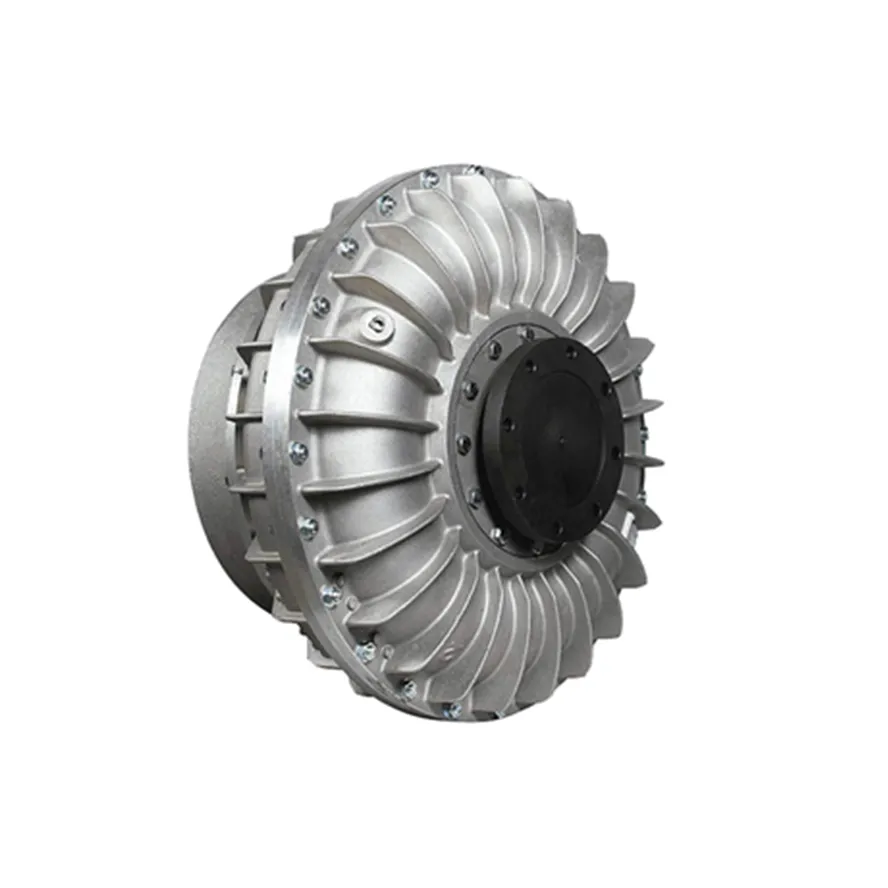
Fluid Couplings in Hydraulic Drive Systems
Yes, fluid couplings can be used in hydraulic drive systems to transmit power and control the speed of driven components. In hydraulic drive systems, fluid couplings act as a torque converter, providing a smooth and gradual transfer of power between the input and output shafts.
The basic principle of a fluid coupling remains the same whether it is used in a mechanical drive system or a hydraulic drive system. The fluid coupling consists of an input impeller connected to the prime mover (such as an electric motor or an engine) and an output runner connected to the driven component.
When the prime mover is activated, it drives the input impeller, creating a flow of hydraulic fluid within the coupling. This fluid flow creates a hydrodynamic torque that is transferred to the output runner, driving the connected component. The fluid coupling allows for a controlled slip between the input and output, allowing the driven component to start smoothly and gradually reach its desired speed.
In hydraulic drive systems, fluid couplings offer several advantages:
- Smooth Torque Transmission: Fluid couplings provide smooth torque transmission, reducing shocks and vibrations in the system.
- Overload Protection: Fluid couplings can protect the drive system from overloads by allowing some slip in the event of sudden changes in load or jamming of the driven component.
- Speed Control: By controlling the flow of hydraulic fluid, the speed of the driven component can be precisely regulated.
- Energy Efficiency: Fluid couplings can help improve energy efficiency by reducing mechanical losses and optimizing power transmission.
Hydraulic drive systems with fluid couplings are commonly used in various industrial applications, including conveyor systems, mining equipment, marine propulsion, and more. They offer reliable and efficient power transmission while protecting the machinery from excessive loads and shocks.
It’s essential to consider the specific requirements of the hydraulic drive system and the characteristics of the fluid coupling to ensure optimal performance and efficiency in the application.
Applications of Fluid Couplings in Industrial Machinery
Fluid couplings are widely used in various industrial machinery and equipment due to their unique characteristics and benefits. Some common applications include:
- Conveyors: Fluid couplings are used in conveyor systems to provide smooth start-ups and overload protection. They help in preventing damage to the conveyor belts and equipment during sudden starts and stops.
- Pumps: Fluid couplings are employed in pumps to control the acceleration and deceleration of the pump impeller. This ensures a gradual and controlled flow of fluids, reducing water hammer and pressure surges.
- Fans: Industrial fans often use fluid couplings to regulate fan speed and avoid abrupt changes in airflow, which can cause mechanical stress and system instability.
- Mining Equipment: Fluid couplings are used in mining machinery, such as crushers and conveyors, to protect the drivetrain from shock loads and to enhance equipment reliability.
- Marine Propulsion Systems: In marine applications, fluid couplings are used in propulsion systems to provide smooth engagement of the propeller, protecting the engine and transmission.
- Power Plants: Fluid couplings are utilized in power plants for boiler feed pumps, induced draft fans, and other equipment to achieve smooth operation and prevent sudden stress on mechanical components.
- Steel Industry: In steel mills, fluid couplings are employed in various equipment, including rolling mills and continuous casting machines, to protect the machinery and enhance productivity.
- Automotive: Fluid couplings are used in automatic transmissions to smoothly transmit power from the engine to the wheels, allowing smooth gear changes and preventing driveline shock.
- Wood Processing: In wood processing equipment, such as chippers and saws, fluid couplings are used to protect the equipment from shock loads and to achieve efficient power transmission.
Overall, fluid couplings play a crucial role in a wide range of industrial machinery applications, providing enhanced protection, smoother operation, and increased equipment longevity.


editor by CX 2024-02-15