
Product Description
Product Description
|
Material |
304/316/316L/CF3/CF8/CF8M/1.4301/1.4408/1.4404/SCH22/SCS13/SCS14/17-4PH/WCB/GS45/HK | ||
|
Standard |
DIN / JIS / ASTM / ASME / BS / GB / ISO |
||
| Thread Ending | NPT / BSPT / BSP / DIN / ISO | ||
| Product weight | 0.005kg~45kg | ||
| Dimensional tolerance | Casting ISO8062 CT5~CT7 ; Machining ISO2768 | ||
| Manufacturing process | Precision casting, investment casting, precision machining NC/CNC | ||
|
Application |
Stainless Steel Pipe System, water system, petrolum system etc.Medicine, food, chemical industry, etc |
||
| Type | Tee, elbow, union, pair wire, quick connector, clamp connector, valve, valve body, pump, impeller, mechanical parts, food machinery, stainless steel customized parts |
||
|
Service |
OEM |
||
|
Delivery |
By Sea / By Air / By Express |
||
| Shipping port | ZheJiang / QingDao / ZheJiang /BeiJin | ||
|
Packing |
Carton Box / Plywood Case / Special Packaging CHINAMFG Customer Requirements |
||
| Supply cycle | Samples are 25-35 days; the order can be adjusted according to the situation for 55 days of normal manufacturing period. | ||
|
Payment Terms |
100% TT / 30%TT in advance, balance 70% before delivery |
||
| Our advantage | We have more than 15 years of manufacturing management experience; we have professional technical engineers in investment casting, machining and quality inspection; we have long-term stable and continuous optimization of product quality and supply cycle management plHangZhou. |
||
Product Show
FAQ
1,What are your strengths?
We have foundry workshop and machining workshop; We have an independent quality inspection team and production process management team; We can provide you with the drawing mapping, mold or product design and manufacturing, as well as the inspection and monitoring management of your products in China;
2,When can I get the price?
The quotation shall provide detailed and complete information within 24 hours after receiving the inquiry. And solutions.
3,How long can you finish the sample?
It is usually completed in 3-5 weeks; Different products adjust the cycle.
4,How long can you finish the order?
After receiving the sample confirmation information, the casting time is usually 6-7 weeks; The finished product was added for another 2-3 weeks;
We welcome your inquiry and cooperation!
HangZhou CHINAMFG Electric Technology Co., Ltd
/* March 10, 2571 17:59:20 */!function(){function s(e,r){var a,o={};try{e&&e.split(“,”).forEach(function(e,t){e&&(a=e.match(/(.*?):(.*)$/))&&1
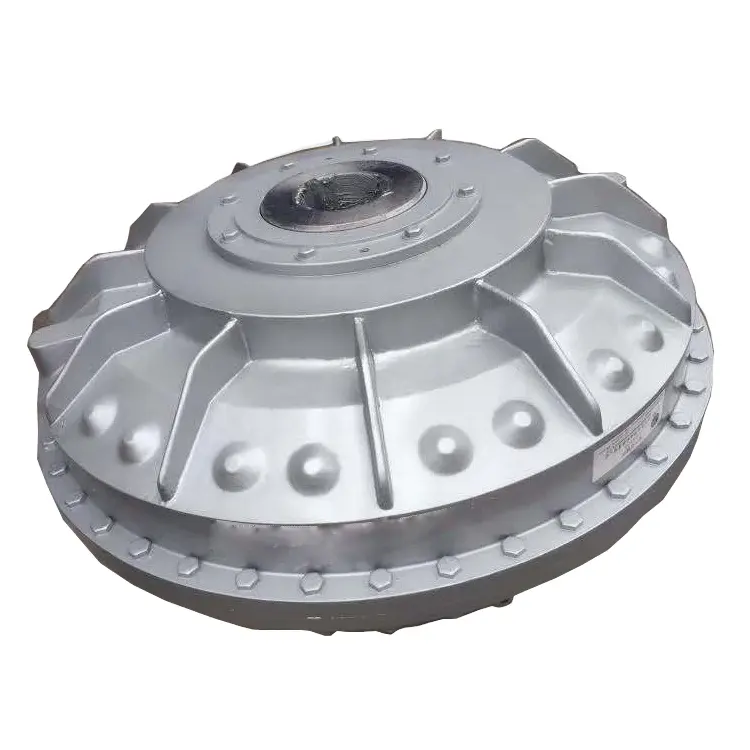
Handling Overloads and Stall Conditions in Fluid Couplings
A fluid coupling is designed to handle overloads and stall conditions in power transmission systems. When an overload or stall occurs, the fluid coupling utilizes its unique operating principle to protect the drivetrain and the connected machinery:
- Slip Feature: One of the key characteristics of a fluid coupling is its ability to slip at high torque loads. When an overload situation arises, the fluid coupling allows some relative motion between the input and output sides, known as slip. This slip absorbs the excess torque and prevents it from being transferred to the driven equipment, effectively protecting it from damage.
- Fluid Circulation: During normal operation, the fluid inside the coupling circulates smoothly between the impeller and turbine, transmitting torque with minimal losses. However, when an overload or stall condition occurs, the fluid circulation may become turbulent, generating heat in the process. This heat dissipation helps in absorbing and dissipating the excess energy, preventing the transmission system from experiencing sudden stress.
- Automatic Reconnection: After an overload or stall condition, once the excess torque is dissipated through slip and heat, the fluid coupling automatically reconnects the input and output sides, resuming the power transmission. This automatic reconnection ensures that the system returns to normal operation once the overload situation is resolved.
- Sturdy Construction: Fluid couplings are designed with robust and durable materials to withstand high torque and thermal stresses during overload conditions. The strong construction ensures that the fluid coupling remains reliable and operational even after multiple overload events.
Overall, a fluid coupling’s ability to handle overloads and stall conditions makes it a reliable and essential component in various industrial applications. By providing overload protection and slip characteristics, fluid couplings help prevent costly damage to equipment, increase operational safety, and contribute to the longevity of the entire power transmission system.
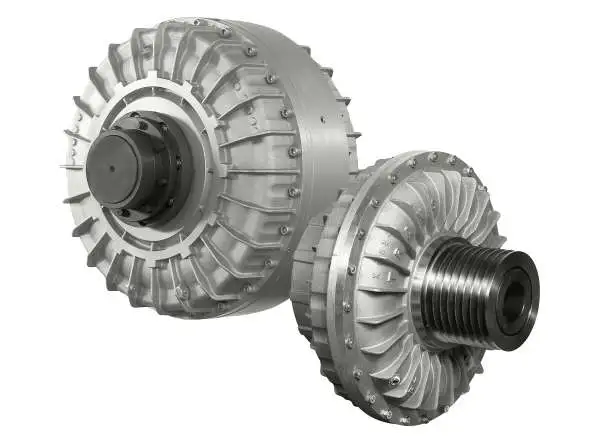
Fluid Coupling: Dealing with Oil Leakage and Sealing Issues
Fluid couplings are designed to be sealed units to prevent the leakage of the internal fluid (usually oil or a similar hydraulic fluid). Proper sealing is crucial for the efficient and reliable operation of the fluid coupling, as any oil leakage can lead to reduced performance, contamination, and potential damage to the surrounding components.
Here are some key factors related to oil leakage and sealing issues in fluid couplings:
- Seal Design: The sealing system in a fluid coupling typically involves shaft seals and gaskets. High-quality seals are essential to prevent oil from escaping and contaminants from entering the coupling. The design and material selection of these seals play a significant role in maintaining effective sealing.
- Installation: Proper installation of the fluid coupling is critical to ensure that the seals are correctly positioned and securely fitted. Any misalignment or damage during installation can lead to oil leakage issues.
- Maintenance: Regular maintenance is essential to detect and address any potential sealing problems early on. Inspections should be conducted periodically to check for signs of oil leakage, wear on the seals, and any damage to the coupling housing.
- Fluid Selection: The choice of fluid used inside the coupling can also influence its sealing performance. Using the recommended fluid type and quality specified by the manufacturer is essential for maintaining proper sealing.
- Operating Conditions: The operating environment can impact the sealing effectiveness. Extreme temperature variations or harsh working conditions may affect the integrity of the seals over time.
If oil leakage or sealing issues are observed in a fluid coupling, immediate action should be taken to address the problem. This may involve replacing worn-out seals, resealing the coupling, or investigating potential causes such as misalignment or excessive heat generation.
Additionally, regular inspection and maintenance of the fluid coupling can help prevent sealing problems before they escalate. Early detection and appropriate maintenance can extend the lifespan of the fluid coupling and ensure reliable power transmission in various industrial applications.
Consulting with the manufacturer or a qualified engineer for guidance on proper maintenance and troubleshooting of fluid coupling sealing issues is recommended.
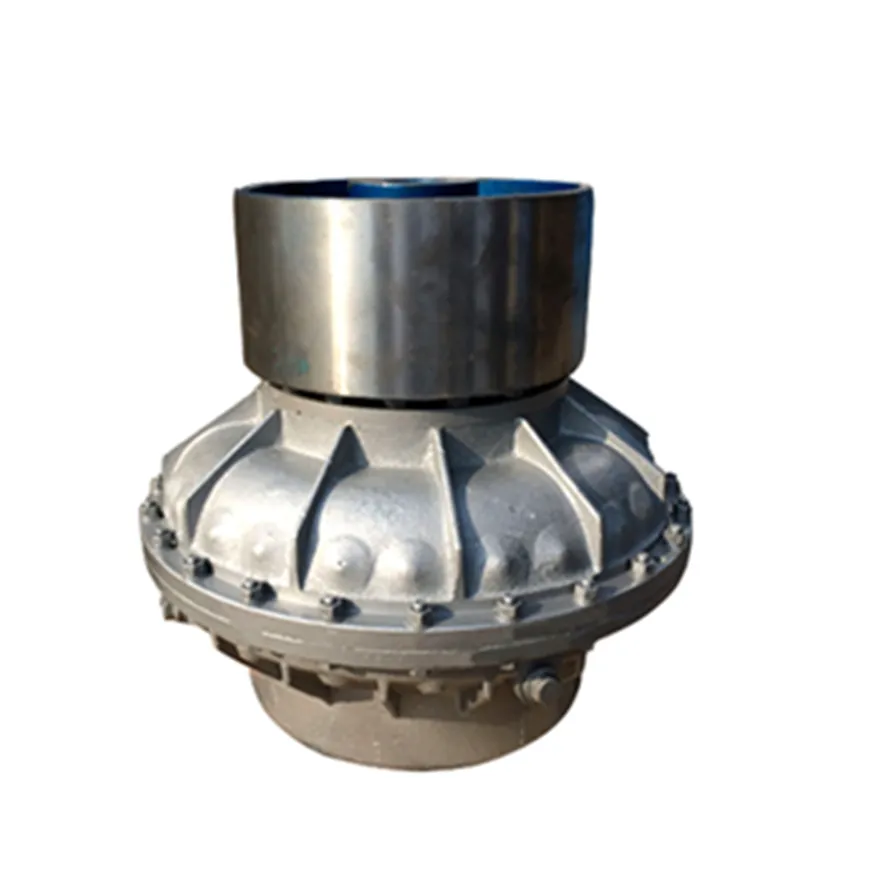
Advantages of Using Fluid Couplings in Power Transmission Systems
Fluid couplings offer several advantages in power transmission systems, making them well-suited for various industrial applications. Here are some of the key benefits:
- Smooth Power Transmission: Fluid couplings provide a smooth and gradual transfer of power from the engine or motor to the driven load. This helps to reduce shock and stress on the entire powertrain, leading to smoother operation and extended equipment life.
- Overload Protection: Fluid couplings act as a mechanical fuse in power transmission systems. When the load exceeds a certain threshold, the fluid coupling will slip, preventing excessive torque from reaching the driven load and protecting the machinery from damage.
- Torsional Vibration Damping: They effectively dampen torsional vibrations, reducing the risk of resonance and fatigue failure in the drivetrain. This is particularly important in applications with varying loads and speeds.
- No Mechanical Wear: Fluid couplings have no physical contact between the input and output components, resulting in minimal mechanical wear. This characteristic reduces maintenance and extends the service life of the coupling.
- Simple Design: The design of fluid couplings is relatively simple compared to other mechanical power transmission devices, leading to lower manufacturing costs and ease of maintenance.
- Energy Efficiency: In certain operating conditions, such as during startup or idling, fluid couplings can offer energy-saving benefits. They allow the engine to run at a constant speed while smoothly transmitting power to the load.
- Wide Range of Applications: Fluid couplings are versatile and can be used in various industrial machinery, including conveyors, crushers, pumps, fans, marine propulsion systems, and more.
Despite these advantages, fluid couplings also have limitations, such as a slight power loss due to slip and limited torque multiplication compared to torque converters. Therefore, the choice between a fluid coupling and other power transmission devices depends on the specific requirements of the application.


editor by CX 2024-02-07